The Lefferts Estate Legacy
The land that now comprises Prospect Lefferts Gardens was originally part of the vast farming estate of the Lefferts family, who settled in Flatbush in the 17th century. The family's 18th-century home, the Lefferts Historic House, now sits preserved within Prospect Park just a short distance from its original location on Flatbush Avenue.
As Brooklyn urbanized rapidly in the late 19th century, the estate was partitioned for development, setting the stage for what would become one of the borough's most architecturally cohesive neighborhoods.
Lefferts Manor and the 1893 Covenant
In 1893, James Lefferts subdivided a portion of his family's estate into 600 building lots, creating the area known as Lefferts Manor. Crucially, he attached a restrictive covenant to the deeds requiring that each lot contain a single-family dwelling constructed of brick or stone.
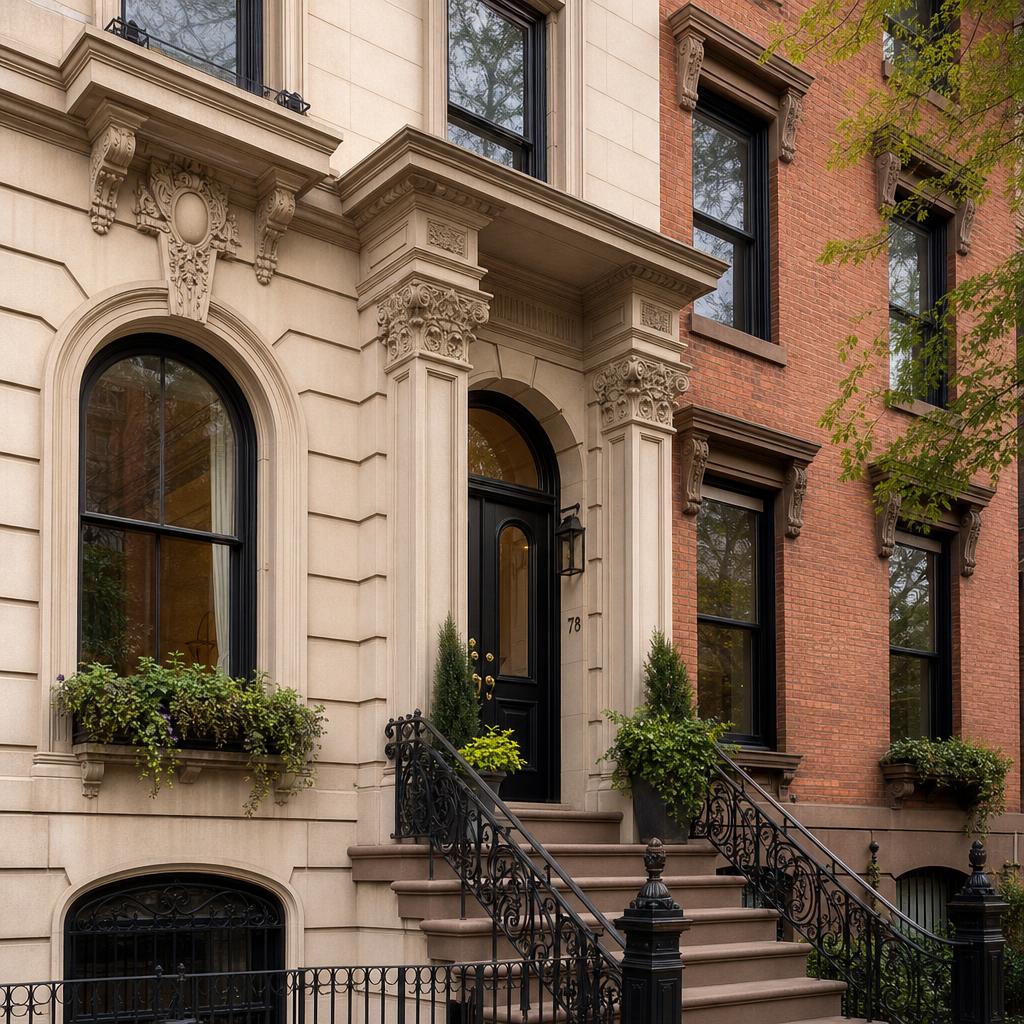
This early zoning mechanism preserved the scale and character of the blocks between Lincoln Road and Fenimore Street. Today, the Lefferts Manor Historic District stands as a remarkably intact showcase of turn-of-the-century rowhouse architecture, insulated from the denser development that occurred elsewhere in the neighborhood.
A Showcase of Rowhouse Styles
Walking through PLG reveals an encyclopedia of Brooklyn architectural styles from 1895 through the 1920s:
- Romanesque Revival: Characterized by heavy masonry, rusticated stonework, and rounded arches, frequently executed in light-colored limestone.
- Neo-Renaissance: Featuring elaborate foliate carving, delicate wrought-iron elements, and symmetrical facades.
- Tudor & Jacobean Revival: Particularly visible on the borders of the neighborhood, identified by half-timbering effects and steeply pitched gables.
- Classic Brownstone: The iconic Brooklyn material, utilized here with late-Victorian detailing that distinguishes it from the earlier Italianate brownstones of Brooklyn Heights or Park Slope.
The Rise of the Apartment House
While Lefferts Manor remained strictly single-family, the surrounding blocks—the "Gardens" and "Prospect" portions of the modern PLG acronym—saw the construction of grand apartment houses in the 1920s and 30s. Concentrated along Ocean Avenue and the neighborhood's perimeters, these buildings introduced Art Deco and eventually Art Moderne influences, accommodating a growing population while maintaining the area's middle-class residential character.